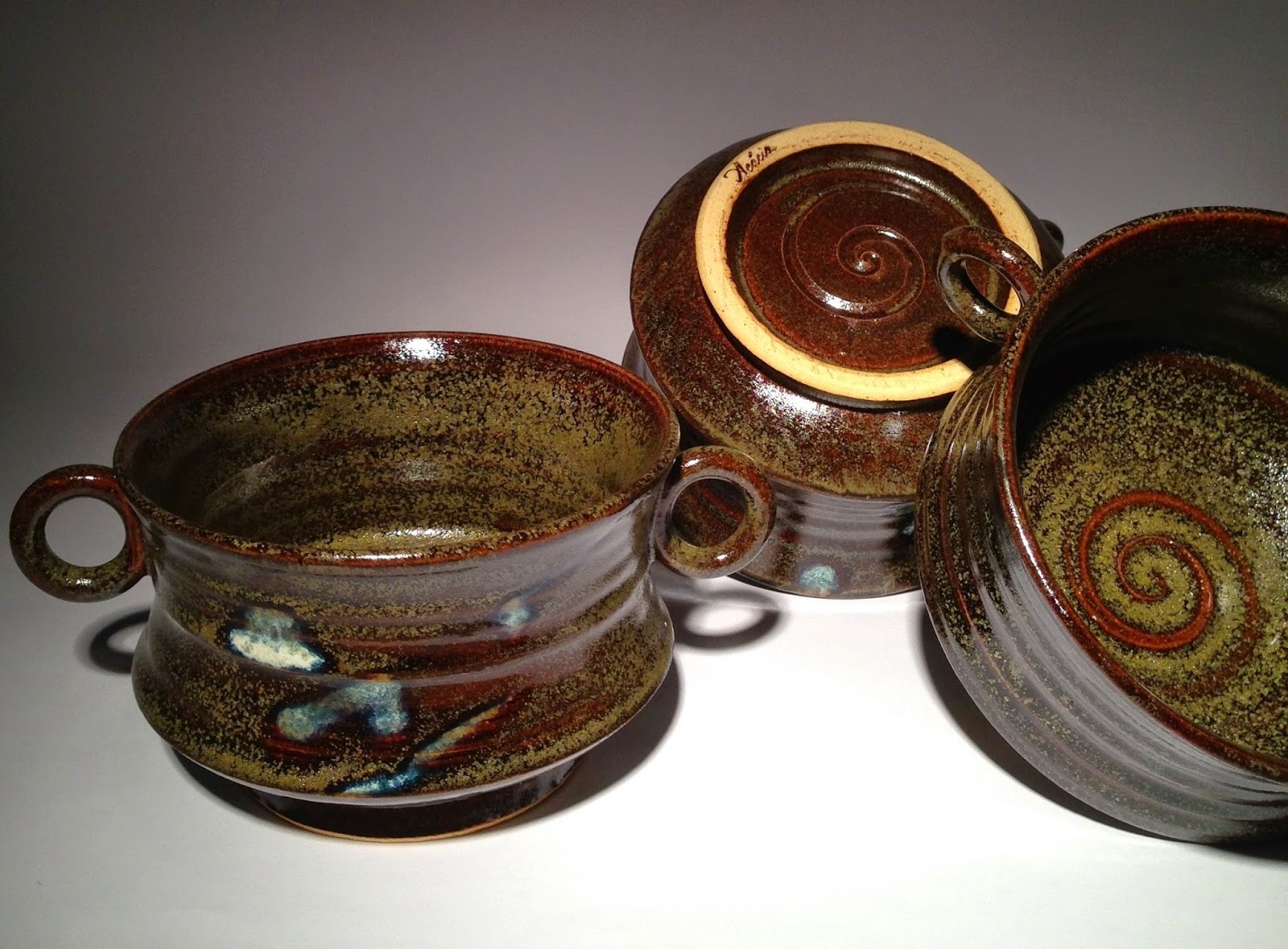
Electric fired - 1260ºC
A utilização de cerâmicas autoral no cotidiano é um hábito recente
para as pessoas por aqui.
Nossa cultura cerâmica nasceu na baixa temperatura, das culturas indígena e sul- americana de um modo mais geral; onde a cerâmica acabou ganhando espaço nos jardins, nos alguidares cheios de frutos sobre as mesas, nos filtros e bilhas de água fresca que nosso clima tropical pede.
Já a cerâmica de alta temperatura veio até nós por influência europeia, americana... No estado de São Paulo, é forte a presença da cultura japonesa. E eles dominam a alta temperatura, conhecem o material e têm nos ensinado sua versatilidade, suas técnicas, sua filosofia.
Os japoneses não têm peças iguais para todos da família. Cada um escolhe sua peça de acordo com seus costumes diários, hábitos alimentares, seu gosto, seu jeito. O Japão é um país de estações bem definidas. E como as sakuras mudam seu aspecto com o clima, os japoneses trocam suas cerâmicas de acordo com as estações. Levam para casa algo como a alegria do verão, a clareza do inverno, o frescor da primavera, os tons quentes e nebulosos do outono.
Aqui não, aqui temos o apego ao jogo de jantar completo e sentimos muito a perda de cada peça. Diferenças... Por outro lado, somos um povo jovem, aberto às novidades. E a cada dia aumenta o número de pessoas que querem algo mais do que um simples copo de vidro ou aquela xícara de café industrial igual a mil outras.
Queremos algo especial, que reconforte a alma, tanto quanto o cafezinho do intervalo do dia. No momento de receber aquele amigo querido, aquele parente que amamos, um simples copo de água oferecido em uma cerâmica, muda tudo, cria outro gesto, outro momento, outros assuntos. Assim também é nas reuniões formais, onde a cerâmica utilitária toma seu sofisticado ar de requinte e indiscutível bom gosto.
Pois somos assim, desejamos uma surpresa para os olhos que termine por aquecer o coração, que nos lembre de quem realmente somos e o que sonhamos. Isso é a cerâmica utilitária para mim e para algumas pessoas que começam a afinar os olhos, as mãos, os gestos, para a novidade que é a experiência de
ter a cerâmica no seu dia a dia.
Aprendi essas coisas com a minha mestra no torno, Hideko Honma Sensei. Aprendi também com minhas alunas em seu processo de evolução. Aprendi com as pessoas que vêm até minha casa, ao meu Studio, compram minhas peças e comentam; felizes como crianças na loja de brinquedos fazendo suas escolhas tão honestas. A boa cerâmica é assim, física, se dá nos encontros. Como um abraço bem brasileiro, nossa cerâmica deve ser também calorosa.
Abrir-se para a experiência com a cerâmica utilitária é levar arte para seu cotidiano. É aprender sobre seus processos, sobre nossa história. E desta forma também, prestigiar os ceramistas que estão por ai perto de você, revivendo entre mãos esse processo ancestral e em contínua evolução. Historicamente a cerâmica revela não apenas o avanço tecnológico de um país, como também a identidade, influências, peculiaridades e sensibilidades de seu povo. E é assim que a cerâmica autoral brasileira está crescendo, com nossa dedicação, com nosso jeito de sentir e ver o mundo.
A cada peça que faço, imagino as mãos que irão acolhê-la, penso na infinidade de sonhos, penso no conforto, penso em como provocar outra respiração. Não sei se consigo. Mas desejo intensamente em todos meus projetos, linhas, gestos, superfícies, texturas, cores, tornar cada peça de cerâmica uma espécie de janela voltada para o que há de melhor em nós mesmos.
por Acácia Azevedo.
Electric fired - 1260ºC
The use of handmade pottery in daily life is a recent habit for Brazilians.
Our culture in ceramics came from low firing, mostly from the indigenous cultures of Brazil and South America, where pottery just gained space in gardens; table bowls plenty of fruits, water filters and jugs of fresh water that our tropical climate asks for.
But the high fire ceramics came to us by European influence, American... Also, at São Paulo city there is a big Japanese colony with strong presence of Japanese culture. And they dominate the high fire, they know the materials and have taught us their versatility, their techniques, their philosophy.
The Japanese have no equal pottery for all family. Each family member chooses his/her pottery according to their daily habits, eating habits,, their way of life. Japan is a country with well-defined seasons. And as the sakura change its appearance following the weather, the Japanese exchange their ceramics according to the seasons. They bring to home something like the joy of summer, bright of winter, the freshness of spring, the warm and fuzzy autumn.
It’s not happen in Brazil. Here we have that kind of feeling to the complete set of dinner we may have inherit and we feel a lot the loss or missing of each piece. Differences ... On the other hand, we are a young country, open to new things. And every day increases the number of people who wants something more to their lives than a simple glass or one industrial porcelain cup of coffee equal to a thousand others.
We need something special, that can relief and reassure the soul as much as the coffee we drink on the afternoon break. While celebrating with one dear friend, that relative we love, a simple act like to offer water in a ceramic cup, changes everything, creates another gesture, another time, other subjects. It is valid for formal meetings too, where utilitarian pottery takes its sophisticated air of refinement and unquestionable taste.
We want a surprise for the eyes that ends up warming the heart, remembering us who we really are and what we dream about. This the way that the utilitarian pottery touches me and others that now begin to sharpen the eyes, the hands, the gestures, using and feeling the experience of pottery in their life.
I learned these things with my master and teacher, Hideko Honma Sensei. I also learned from my students in the process of evolution. I learned from the people who come to my house, my studio, and buy my artwork and comment; happy as kids in a toy store doing your choices so honestly.
The good pottery is like that: physical, tactile poem. It occurs magically on meetings. Like a Brazilian hug, our ceramic must be warm.
Open yourself to the experience with the handmade pottery is to bring art to your everyday life. You learn about their processes, about their history. Support potters that are near you, between their hands this ancient process is a never ending evolution.
Historically, pottery reveals not only the technological advance of a country as well as the identity, influences, peculiarities and sensitivities of the people. And that is the way that signature Brazilian pottery is growing, with our dedication to our way of feeling and seeing the world.
Every piece I do, I imagine the hands that will welcome it, hold it. I think about the multitude of dreams, think about comfort, about how to take another breath of emotion. I don’t know if I can. But I wish from the bottom of my heart that all my projects, lines, gestures, surfaces, textures, colors, make each piece of pottery a kind of window facing and mirroring the best in ourselves.
by Acácia Azevedo